|
|
|||||||||||||
Meet the Composer - Johann Sebastian Bach |
||||||||||||||
|
|
|||||||||||||
Meet the Composer - Johann Sebastian Bach |
||||||||||||||
|
Bach: Come in, come in!
Bach: Why, certainly. But I must ask you to sit down and keep still for just a little while, please, until I can finish this fugue. [three-minute pause] Now then, what can I do for you, young ones?
Bach: Well, I've been writing fugues for a long time now; it gets much quicker after many years at it. What did you wish to ask me?
Bach: Oh, I can hear it quite clearly in my head. And you will be able to do that, too, when you've listened and studied long enough; it's one of the best ways to practice! Ernst: I've been practicing a Minuet of yours--the one in G Major. Bach: I'm not sure which one you mean. Play it for me!
Bach: Oh, that! Yes, that's a nice little piece, but I didn't really write it.
Bach: No, that came from a notebook of various short pieces I collected for my wife, Anna Magdalena, to study. I wrote some of the chorales and things in there, but most of those minuets and marches and musettes came from somewhere else; we don't even know who wrote them.
Bach: Yes, they were for my son, Carl Phillip Emmanuel--or was it Johann Christian? [pause] Actually, I think it was for Wilhelm Friedmann--yes, I'm sure of it. I've had twenty children to keep track of, you know!
Bach: Not only harpsichord, but clavichord and organ, plus theory and composition as well!
Bach: Oh, yes, this church is a busy place. I write a brand new cantata every single week for the Sunday worship service.
Bach: No, that was an organ solo which I wrote to play for a postlude. But you can write fugues to be sung, as well..
Bach: [laughs] A postlude is a solo played after the service is over--the opposite of a prelude, which is played before.
Bach: A cantata is a work for choir, and it's usually in several movements; it's composed to words which are especially chosen to suit the theme of a particular Sunday or season, like Christmas or Easter. Anke: You must be writing a lot of Christmas music right now. Bach: Actually, Christmas will be a little easier for me this time: I wrote a large work for chorus and orchestra about six years ago called "Christmas Oratorio", and I've been asked to perform it again this year. Anke: I'm afraid I don't know what an oratorio is, either. Bach: Think of this one as a choir piece about the size of six cantatas. But you two still haven't said what it was you wanted to ask me! Ernst: Mr. Bach, I think you've already answered just about every question we could ever think of; so I think we'll be going now; and thank you very much--we learned a lot! Anke: And we wish you a Merry Christmas, Sir! Bach: And a very Merry Christmas to you, too, my young friends. Come again! |
|
|
I made this on: 11/30/98 Newest stuff added: 01/30/15 |
| Site Policies | Credits | About | Feedback | Reprinting |
 The Piano Education Page, Op. 10, No. 2,
https://pianoeducation.org
The Piano Education Page, Op. 10, No. 2,
https://pianoeducation.org
© Copyright 1995-2026 John M. Zeigler. All rights reserved.
 PEP Program Notes
 or
or
 below
below


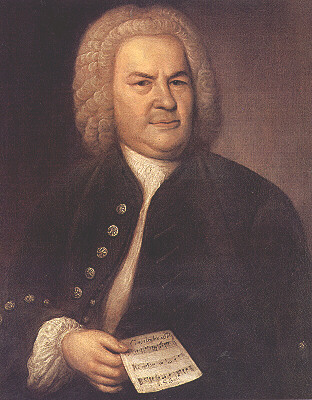
 Anke: Mr. Bach, we are two students from Vienna; may we visit
for a few moments and ask you some questions?
Anke: Mr. Bach, we are two students from Vienna; may we visit
for a few moments and ask you some questions?